Description
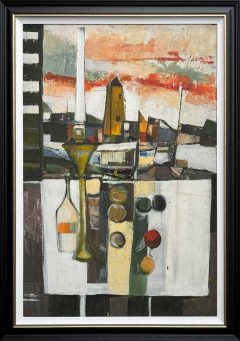
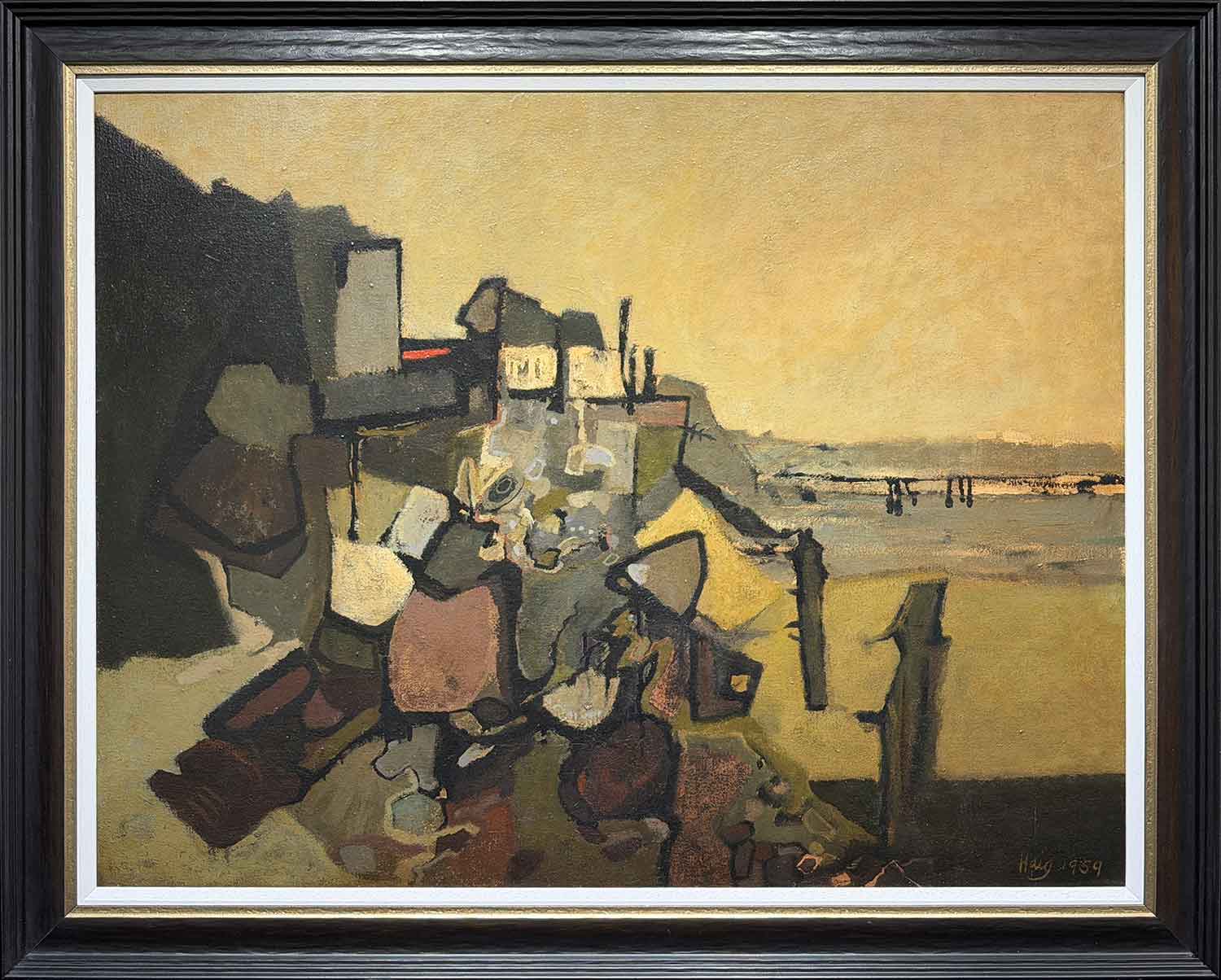
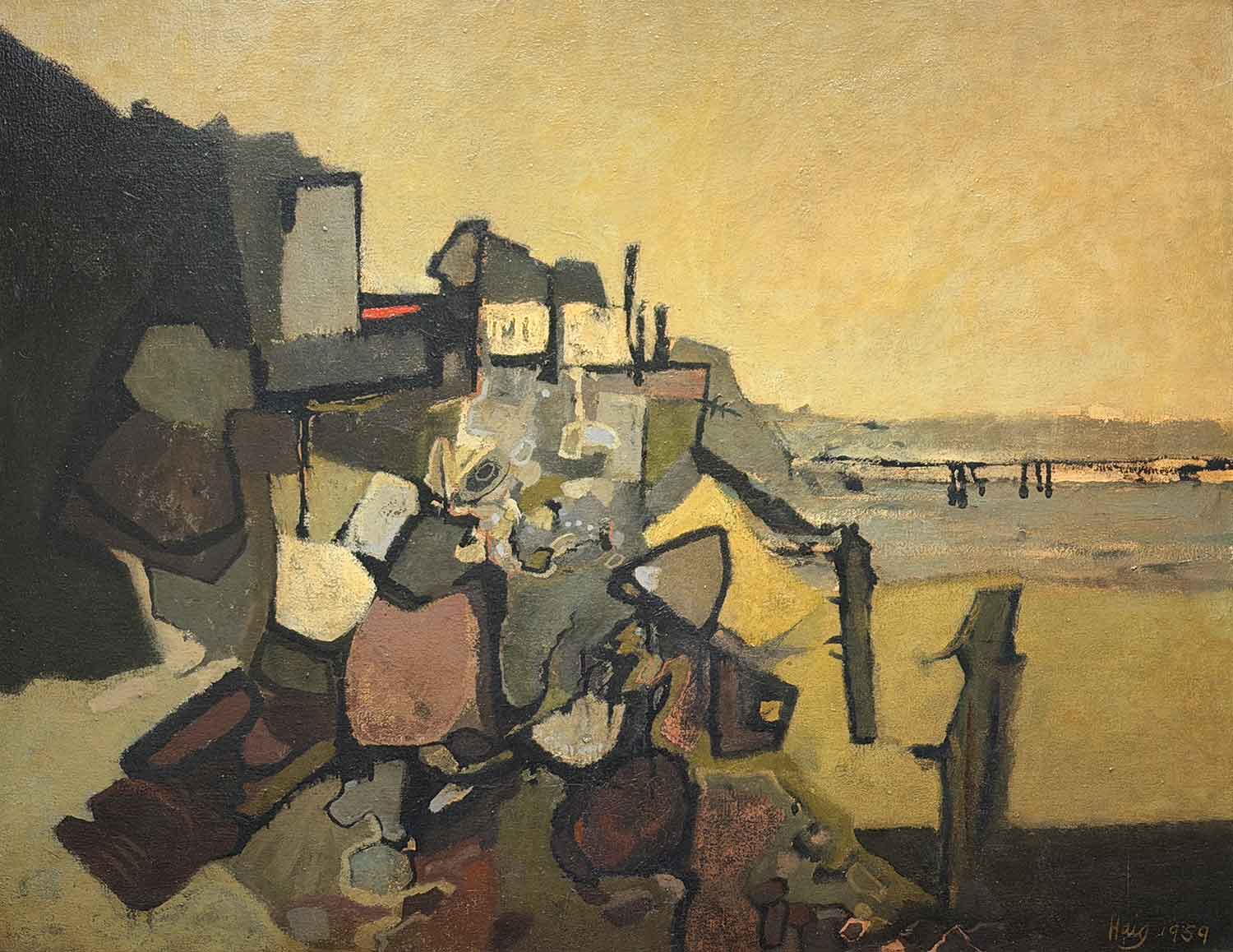
Earl Haig OBE RSA (1918 – 2009) – Coastal Scene
Oil on canvas
Signed & dated 1959 bottom right
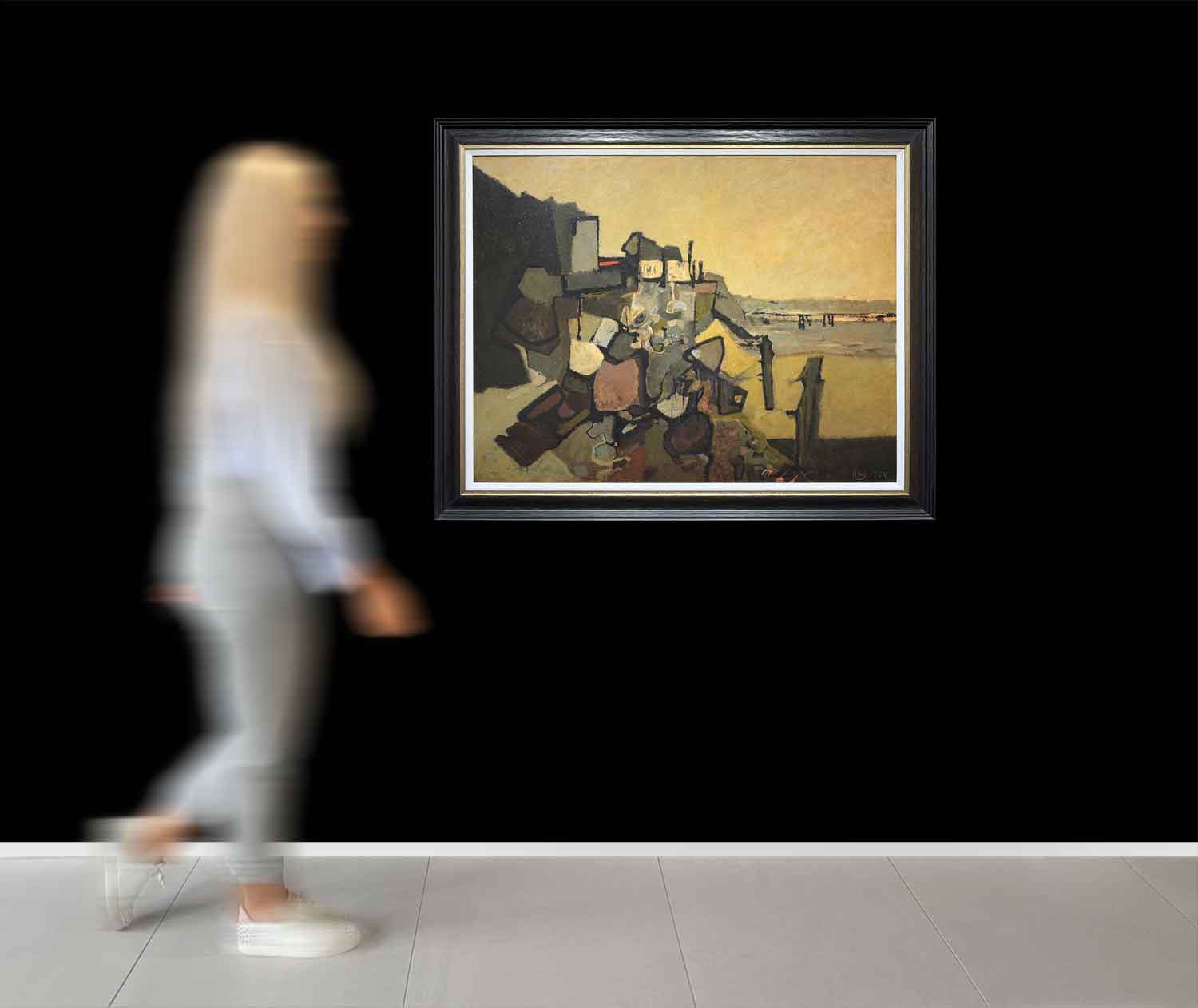
Painting Size : 28 x 36″ Inches – Framed Size 33 x 41″
_______________________________
Earl Haig OBE RSA (1918 – 2009)
George Alexander Eugene Douglas Haig, 2nd Earl Haig RSA (1918–2009), known affectionately as Dawyck Haig, was a Scottish painter, peer, and soldier who forged a distinctive artistic career while navigating the formidable legacy of his father, Field Marshal Douglas Haig, 1st Earl Haig.
Born in London on 15 March 1918, just months before the end of the First World War, he inherited the earldom at the age of nine in 1928. Educated at Stowe School and Christ Church, Oxford (where he earned a BA in 1939 and later an MA), Haig led a life marked by privilege, military service, and creative pursuit.
Early Artistic Development
Haig’s artistic journey began in adversity during the Second World War. Commissioned into the Royal Scots Greys, he served in the Western Desert Campaign and was captured in 1942. He endured imprisonment in Italy and Germany, including at the notorious Colditz Castle as one of the “Prominenti” (high-profile prisoners). There, to combat boredom and despair, he took up drawing and painting—starting with pencil sketches and progressing to watercolours and oils. This period proved formative, sparking a lifelong passion.
After the war, he studied at Camberwell School of Arts and Crafts (1945–1947), where his teachers included William Johnstone, Victor Pasmore, Lawrence Gowing, William Coldstream, and Claude Rogers. He also studied with Paul Maze during holidays. Haig began exhibiting soon after the war, with his first solo shows at the Redfern Gallery in London and the Scottish Gallery in Edinburgh in 1949.
Artistic Style and Career
Haig established himself as an accomplished painter of landscapes, townscapes, and figures in a modern tradition, working primarily in oils and watercolours. His work often drew from Scottish Borders scenes, Italian views (inspired by time spent with his second wife’s family in Venice), and abstracted or expressive interpretations of place. He occasionally painted portraits and was noted for a sensitive, personal approach that blended observation with modernist influences.
A breakthrough came in 1956 when one of his portraits sold at Christie’s alongside works by Old Masters like Rubens and Rembrandt, helping solidify his reputation. His paintings entered public collections including the Arts Council and the Scottish National Gallery of Modern Art. He was elected an Associate of the Royal Scottish Academy (ARSA) in 1988 and a full Royal Scottish Academician (RSA) in 2005. Retrospectives, such as Haig at Ninety at the Scottish Gallery, celebrated his contributions.
Life and Legacy
Haig balanced his artistic life with public duties as the 30th Laird of Bemersyde, restoring the historic family estate near Melrose in the Scottish Borders. He was deeply involved in veterans’ charities, serving as Chairman of the British Legion in Scotland and President of the Earl Haig Fund, and was appointed OBE in 1966 for these services. He also served on bodies like the Royal Fine Art Commission for Scotland and the Scottish Arts Council.
He published a memoir, My Father’s Son (2000), reflecting on his complex relationship with his father’s legacy. Haig was married twice: first to Adrienne Morley (1956–1981), with whom he had three children (including the 3rd Earl Haig), and second to Donna Gerolama Lopez y Royo di Taurisano in 1981.
Dawyck Haig died on 9 July 2009 at age 91. His work continues to be appreciated for its quiet strength and personal vision, representing a unique bridge between aristocratic heritage, wartime experience, and mid-20th-century Scottish modernism. He is remembered as much for his paintings as for his lifelong efforts to honor his father’s reputation while carving out his own identity as an artist.